

The Renovation Process
A brief history of time…
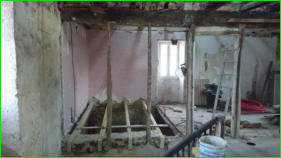
So, with planning permission granted, February 2013 saw us sat in the freezing kitchen of the farmhouse, interviewing builders to undertake a long list of works, including renewal of house and barn roofs, window and door openings, stone wall demolition and creation, new floors, micro-station installation and all new plumbing and electrics. Choosing the right builder is obviously an enormous factor for the success of the project and we were lucky we both agreed that one stood out in terms of understanding the required level of work planning and the detailed pricing proposals he provided. He didn’t want to just bulldoze the lot and ask for a blank cheque! Andrew and Philippe started work in earnest in May 2013 with the roof, whilst we holidayed with friends in a nearby gîte, but helping with the clearing of the site, and starting the renovation of windows and shutters.
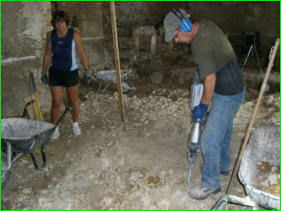
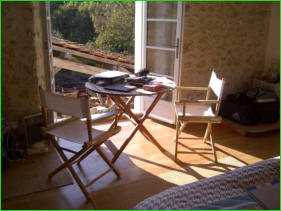
Oops what have we done?
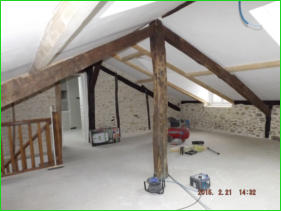
2 stone walls were demolished in the barn and a decision was made to prioritise our mezzanine master bedroom and a utility room underneath so that we could operate from a base on site. The rest of the barn was to one day form our living space. I can’t stress enough the importance of living with the project and keeping as much as possible of the original building and its inherent character. It evolves like a living thing, showing us where functions should be located and where outside spaces would be most enjoyed, depending on time of day. Not having traditional foundations but growing out of and on the solid rock the area is famous for, Le Capinet resisted major efforts to dig out floors for concrete floors, plumbing and electric conduits. But most significantly the hole for the micro-station installation which was a big beast, given the number of bathrooms and WCs in the plans. Many sweaty hours were spent digging and chiselling to get to the required depth, but eventually ground zero was achieved, or occasionally compromised with when the house rocks refused to budge. But the pipes, cables and over budget micro-station were finally installed.Was it a simple process?
Soon after, an oak mezzanine floor was laid and Malcolm installed the first ensuite so that we could operate with a camping kitchen in the utility below. Using our favourite handmade, salvaged ladder linking the two, we became experts at climbing to the mezzanine floor with trays of gin and tonics and curries. We even entertained friends and our brave French neighbours in our “student” mezzanine bedroom! There are 3 other houses in our little hamlet of Le Capinet, all French and all incredibly welcoming and frequently hosted these idiotic Brits who had taken on so much work and spending next door! During this time, we were shuttling between Knutsford and Bourdeilles in our little Ford van packed to the gunnels with Helen’s eBay purchases and Malcolm’s tools, but with a special space reserved for a reluctant cat Bessie in her “palace” cage. Reluctant that is until she arrived and immediately explored the surroundings meeting the wildlife, especially lizards and their ability to shed a madly spinning tail, while they crept quietly away.
A haven to escape to…
We have to mention the Donjon at this point. We’d eaten at the courtyard restaurant of the B&B in our local village of Bourdeilles and it soon became our base whilst Le Capinet was uninhabitable. Lucie and Étienne were incredibly welcoming and Malcolm practically lived there whilst I was in the UK working, gaining privileged access to the espresso coffee machine but not gaining much access to improving his French!Taking shape…
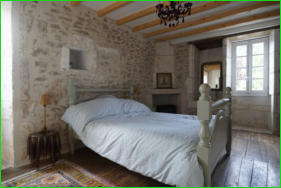
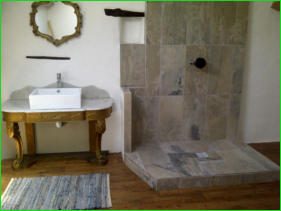
Gradually an attic bedroom and fabulous ensuite was created in the original house, using two pieces of toughened glass, 60 and 40 kilos, carried from the UK on the roof of our van and winched up (carefully and with some swearing) via the barn. The 4 original bedrooms on the first floor, were remodelled into two large rooms with ensuite and the ground floor living room and the sole original bathroom were transformed into a split level kitchen - the house, or more precisely the rock foundations won this time. The original kitchen became a ground floor study/bedroom with tiled wet room (using a “fun-to-do” jigsaw puzzle of the remaining tiles from the other bathrooms - thanks Jay!). And finally the pool, perched on the rock overhang indicative of the Dronne area, above Jerome’s watermill. It now sits almost in the tops of the riverside trees with its large decking area, it is the finishing touch, the icing on the cake. It, like the house, became a labour of love, much bigger and higher spec than the small wooden, above ground plunge pool we’d originally discussed. Made possible thanks to a legacy from my mum. The pool material, Aquapierre allows for seamless curves, almost sculpting of the inside surfaces and steps and giving the impression of being carved out of stone. Malcolm and a lovely local village friend George completed the decking area in often ridiculously hot days. The pool water system is ionised meaning soft water with minimal added chemicals that you could almost drink. The pool and surrounds are beautiful features that we overlook from our bedroom balcony. The above description covers literally years of work from the builder and us, plus various specialists along the way. Malcolm has installed and tiled the bathrooms, sanded beams, installed the kitchen and I’ve cleaned, painted or sanded just about every surface, chimney-breast, wall, floor and door. In addition, ever since the purchase, I became an eBay squirrel, buying lamps, chandeliers, chairs and pictures when I saw them and storing them at an understanding friend’s stables (thanks Stef). Plus of course accepting all friends’ contributions (Pat and Clare to name but two) or throw outs and brocante purchases that have all contributed to making Le Capinet into a big, beautiful, unique welcoming space. I hope the above gives a small flavour of the evolution of our renovation story, which has been a joy at almost all moments, yes Greg, pretty hopelessly over budget, but created with love and incorporating as many of the original house and barn features as possible. Many friends have participated in the journey, both with labour and helpful items, generously given, and hopefully will do in the future, helping us to enjoy the fruits of our joint labours. More examples of the transitions can be seen in the Photo Gallery page.
© Helen and Malcolm Sawyer 2024